


Security by design
 Official Website – Federal Republic of Germany
Designed as a reliable and secure companion.
Your credentials are stored encrypted on your phone. There is no central data collection. Data is shared directly with the recipient only, and only if you explicitly agree to share it.
Only the information from a credential that is requested for the specific use case is shared. For example, your Digital ID can confirm that you are “over 18” without including your date of birth – or even your name and address. The recipient does not see any of the other data.
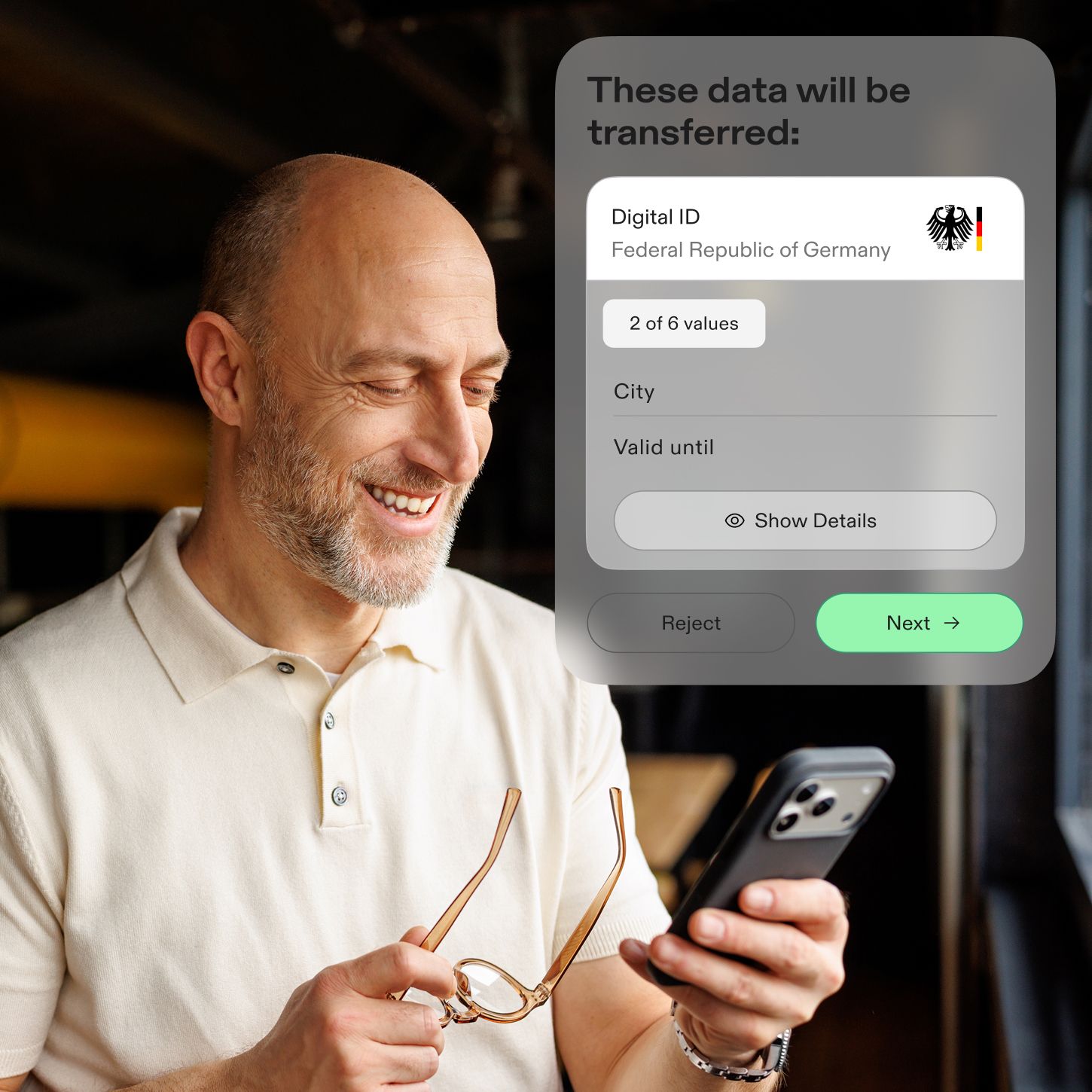
d-you does not create profiles about you. All your personal credentials are stored locally on your phone and are shared only with your explicit consent. d-you is built so that the wallet operator and the issuers of credentials cannot track where and when you use your credentials. Different services also cannot link your use, as long as you share only pseudonymous or anonymous data with them. When you use the Digital ID function, the security server learns only that someone is using a wallet under a pseudonym. It does not learn who that is, what data is shared, or with whom.

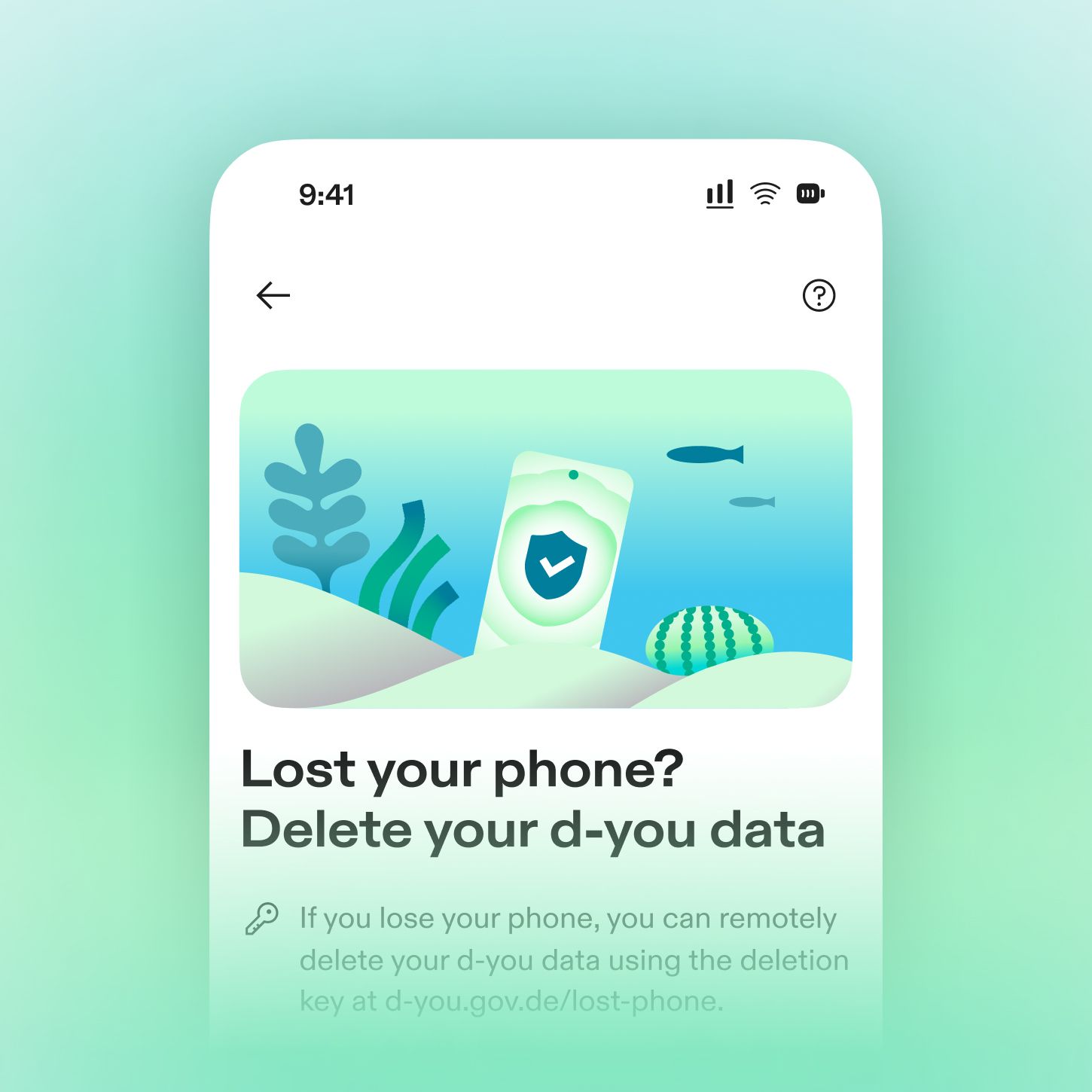
If your phone is lost, you can block d-you remotely with your deletion key. From then on, your wallet is invalid and can no longer be used to show credentials. The app on the lost phone then deletes all credentials. If you have allowed notifications, this happens the next time the app is opened. Otherwise it happens the next time someone tries to show the Digital ID, and after one month at the latest. Until then, your screen lock – for example fingerprint or face recognition – protects against unauthorized use. Your Digital ID additionally requires your Digital ID code. The blocking or deletion cannot be undone. On a new phone, you set up d-you again and retrieve your credentials.
Security by design

Audited to SOC 2 Type 2

Certified to ISO 27001
The technical documentation of the national EUDI Wallet: These documents give you an overview of the functional, technical and organizational foundations of the project.

The blueprint is based on the eIDAS 2.0 Regulation and the European Architecture and Reference Framework (ARF). It describes how the German EUDI Wallet ecosystem is implemented. It contains:
The Federal Government has decided to provide a national EUDI Wallet. On behalf of and under the responsibility of the Federal Ministry for Digital Transformation and Government Modernisation, Common Codes is developing d-you, the national EUDI Wallet, and shaping the related ecosystem together with other project partners. Usability, data protection and security are at the center. The architecture documentation describes:
Your data is stored locally on your phone and cryptographically protected. The Wallet operator has no access to the contents of your Wallet. For certain security functions, keys are managed in specially protected hardware security modules. There is no central collection of your Wallet data.
No. Profiling is technically prevented. The provider receives no information about when, where, or with whom you use the Wallet. Commercial use or sharing of usage data with third parties is excluded.
Yes, prospectively throughout Europe. d-you is based on the EU regulation eIDAS 2.0. This regulation sets uniform and secure standards for digital identities in the EU. The goal is that you can also use d-you in other EU countries. Whether and exactly when this becomes possible depends on further implementation.